Konkrete Ausgangslage
Der Use Case lohnt sich, wenn wiederkehrende Aufgaben heute manuell geprüft, kopiert, beantwortet oder zwischen Systemen weitergereicht werden.
 ConsultingServices.aiAI Consulting for SMEs
Use Case in Detail
Scale marketing without loss of quality: B2B campaigns and sales outreach run through finely-tuned corporate LLMs. Persona-specific content is generated at the push of a button, while the tone matches the brand voice exactly. Scalable relevance instead of generic spam.
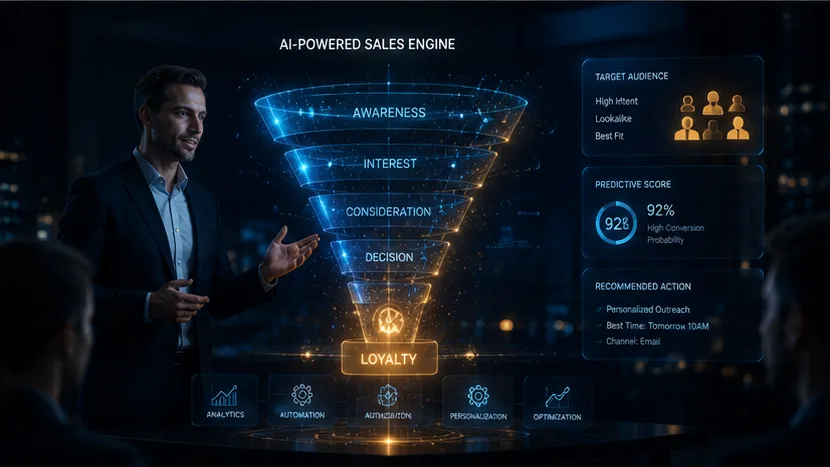
A closed system accesses your previously strongest marketing best performers (RAG – Retrieval-Augmented Generation). It produces blog posts, white papers, ads, and highly personalized cold emails based on real company knowledge, not from standard ChatGPT memory.
Less suitable if: The market is completely dependent on analog word-of-mouth and digital marketing plays hardly any role.
Business Impact
Higher content output with the same resource expenditure.
Increased response rate with AI-personalized outreach.
Compliance with CI, wording, and corporate identity.
The core identity and brand guidelines (style guide, tonality, no-go words) are firmly embedded in the system as a meta-prompt.
Language models feed the account-based marketing (ABM) loop. An outreach email autonomously refers to the latest press release (funding, launch) of the lead.
Nothing goes live without the approval of the marketing manager. The AI suggests 3 variants – the human acts only as an editor.
Frequently Asked Questions
Only with standard accesses (ChatGPT). A professionally seeded LLM via few-shot and RAG imitates 1:1 the cadence, rhythm, and vocabulary of your best salespeople.
Text generation yes. Scalable, precisely integrated into your own HubSpot or Salesforce workflow, data protection-compliant corporate assets, however, are high-end architecture.
Save expensive text work and scale outbound. Schedule a demo for Corporate GenAI.
Vertiefung
Damit ein Use Case nicht nur interessant klingt, muss er in Prozessvolumen, Datenlage, Risiko und messbarer Wirkung übersetzt werden.
Der Use Case lohnt sich, wenn wiederkehrende Aufgaben heute manuell geprüft, kopiert, beantwortet oder zwischen Systemen weitergereicht werden.
Der wirtschaftliche Hebel entsteht meist aus eingesparter Bearbeitungszeit, weniger Fehlern, schnellerer Reaktionszeit und besserer Auslastung vorhandener Teams.
ROI-Beispiel
Das entspricht rund 24.000 EUR manuellem Jahresaufwand. Bei 30 Prozent Entlastung entsteht ein rechnerisches Potenzial von ca. 7.200 EUR pro Jahr.
Die tatsächliche Wirtschaftlichkeit hängt von Prozessvolumen, Datenqualität, Integrationsaufwand und Freigabeanforderungen ab.